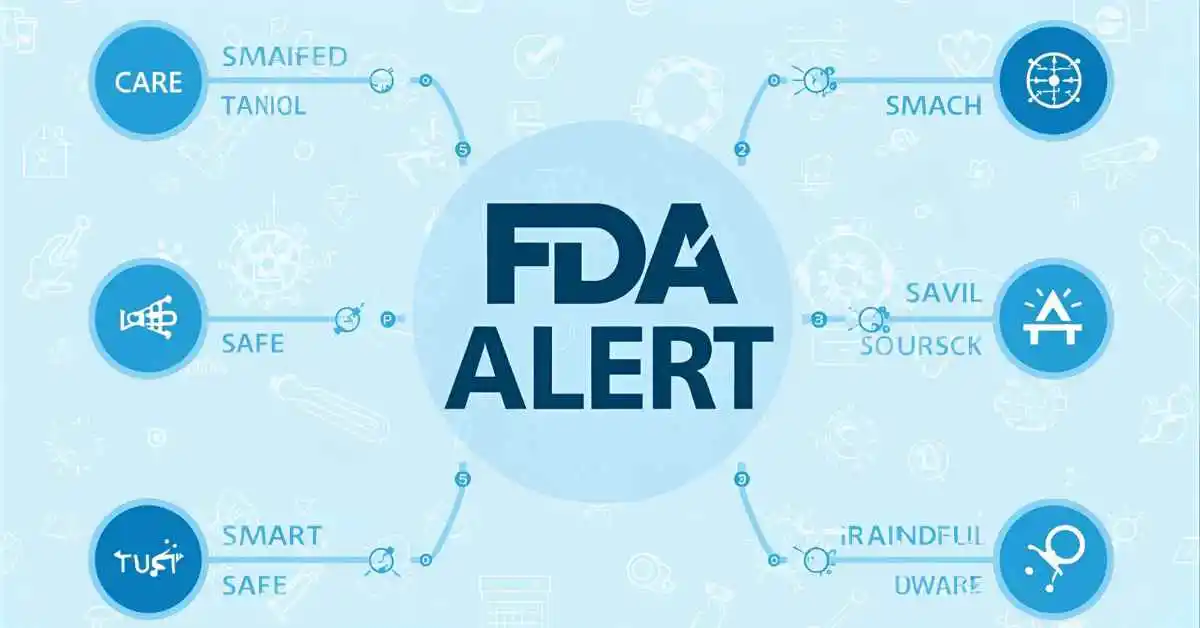
When you see the phrase “Food and Drug Administration (FDA) Alert”, you know something urgent is happening: a product recall, a safety warning, an official regulatory notice. The term conveys alertness, awareness, and responsiveness. In communication—whether in business, leadership, healthcare, or personal growth—being “alert” means paying attention, reacting appropriately, and resonating with your audience or situation.
In this article, we’ll dive into the meaning of “FDA alert”, explore its subtleties, and then present 30 creative acronyms you can use to express similar ideas of awareness, readiness, and resonance in your writing or speech. Each acronym will include its meaning, example sentence, and guidance on when to use it—so you know exactly how to choose the right term for your tone and context.
Let’s get started.
2. What Does “FDA Alert” Mean?
An FDA alert is an official message from the FDA notifying stakeholders about a health or safety risk—such as a drug recall, contaminated food import, or medical-device malfunction. U.S. Food and Drug Administration+2U.S. Food and Drug Administration+2
Beyond its regulatory sense, the term captures three key nuances in communication:
- Awareness: You’re tuned into what matters.
- Readiness: You’re prepared to act or respond.
- Resonance: Your message impacts others—people listen or change because you were clear and timely.
In everyday writing or leadership, saying something is an “FDA alert moment” means you’re signalling high attention, urgency, and clarity.
3. 30 Acronym-Based Alternatives for “Resonate / Alertness”
Below are 30 acronyms crafted around the idea of alertness, awareness, responsiveness, and resonance. Each includes: meaning → example → when to use.
1. FOCUS — Find Opportunities, Create Useful Solutions
Meaning: Being alert by spotting opportunities and acting.
Example: “During the safety briefing, the FOCUS team identified a crucial risk early.”
When to use: In business or innovation contexts where you emphasise proactive awareness.
2. CARE — Consider, Assess, React, Evaluate
Meaning: Alertness with compassion and reflection.
Example: “As a customer-service leader, you must CARE when handling complaints.”
When to use: For empathy-driven communications, HR, healthcare, team management.
3. ALERT — Analyze, Listen, Evaluate, React, Take action
Meaning: The classic alert process.
Example: “Our crisis protocol remains ALERT until further notice.”
When to use: Formal safety, compliance, crisis-management writing.
4. READY — Respond, Evaluate, Adapt, Decide, Yield
Meaning: Being prepared and flexible.
Example: “We kept the team READY for regulatory changes.”
When to use: Operational, manufacturing, regulatory change contexts.
5. AWARE — Assess, Watch, Analyze, Respond, Evaluate
Meaning: Emotional or situational alertness.
Example: “Leaders who are AWARE build stronger teams.”
When to use: Personal development, leadership, emotional-intelligence topics.
6. WATCH — Wait, Analyze, Think, Conclude, Handle
Meaning: Careful observation before action.
Example: “She stayed WATCH during the negotiations to catch subtle cues.”
When to use: Negotiations, strategy, diplomacy, cautious settings.
7. GUARD — Gather, Understand, Assess, React, Defend
Meaning: Protective alertness.
Example: “We must GUARD against supply-chain vulnerabilities.”
When to use: Security, risk management, safety-critical writing.
8. SIGNAL — Sense, Interpret, Gauge, Notice, Act, Listen
Meaning: Alertness through interpretation of signs.
Example: “The SIGNAL in the data pointed to a hidden trend.”
When to use: Data-analysis, research, marketing, intelligence contexts.
9. HEED — Hear, Evaluate, Examine, Decide
Meaning: Paying close attention and acting.
Example: “We HEED warnings issued by the regulatory board.”
When to use: Serious compliance, safety training, formal warnings.
10. LISTEN — Learn, Interpret, Sense, Think, Engage, Notice
Meaning: Deep awareness via listening.
Example: “Effective managers LISTEN first before making changes.”
When to use: Leadership, coaching, mentoring, teamwork.
11. ALERTS — Assess, Learn, Evaluate, React, Track, Support
Meaning: Continuous vigilance and support.
Example: “Our system remains ALERTS to anomalies across operations.”
When to use: Monitoring systems, AI/automation, ongoing operations.
12. CALM — Check, Analyze, Listen, Manage
Meaning: Emotional alertness with composure.
Example: “During the recall announcement she stayed CALM and clear.”
When to use: Crisis communications, leadership under pressure.
13. SMART — See, Measure, Act, React, Think
Meaning: Intelligent alertness grounded in data.
Example: “Our SMART dashboard flagged the deviation in real-time.”
When to use: Technology, innovation, analytics, performance review.
14. STAY — Stop, Think, Act, Yield
Meaning: Controlled caution before action.
Example: “In volatile situations, it’s wise to STAY and evaluate.”
When to use: Messaging around restraint, safety, reflective decisions.
15. CLEAR — Comprehend, Listen, Evaluate, Act, Review
Meaning: Transparent, thoughtful alertness.
Example: “We kept our communication CLEAR during the regulatory alert.”
When to use: Public relations, compliance updates, stakeholder messaging.
16. SHARP — See, Hear, Analyze, React, Protect
Meaning: Quick, precise awareness.
Example: “The auditor remained SHARP throughout the inspection.”
When to use: Audits, compliance, rapid-response teams.
17. QUICK — Question, Understand, Interpret, Conclude, Keep watch
Meaning: Swift and thoughtful response.
Example: “A QUICK review flagged the labeling error before distribution.”
When to use: Fast-paced environments, manufacturing, supply-chain.
18. SAFE — Scan, Assess, Fix, Evaluate
Meaning: Safety-first alertness.
Example: “Our SAFE protocol kicked in when contamination was suspected.”
When to use: Health, safety, manufacturing, regulatory compliance.
19. TRUST — Track, Review, Understand, Support, Test
Meaning: Building confidence through alertness.
Example: “Customers TRUST our alerts because we track and test thoroughly.”
When to use: Branding, customer-communication, quality assurance.
20. WATCHER — Wait, Analyze, Track, Check, Help, Evaluate, React
Meaning: Continuous monitoring alert.
Example: “The WATCHER team detected anomalies overnight.”
When to use: 24/7 operations, security, monitoring systems.
21. MINDFUL — Monitor, Interpret, Notice, Decide, Focus, Understand, Learn
Meaning: Emotional/situational awareness and responsiveness.
Example: “Be MINDFUL of team morale during change management.”
When to use: Leadership, personal growth, culture-change writing.
22. SCAN — Search, Check, Analyze, Notify
Meaning: Quick detection and reporting.
Example: “Our SCAN protocol identifies risks early in the process.”
When to use: Import, inspection, security checking, regulatory screening.
23. REACT — Recognize, Evaluate, Adjust, Communicate, Take action
Meaning: Balanced alertness leading to action.
Example: “We REACTed swiftly when the FDA alert came in.”
When to use: Crisis, communications, incident response.
24. VERIFY — Validate, Examine, Review, Inspect, Follow-up, Yield results
Meaning: Alertness with verification and follow-through.
Example: “Before public release we VERIFY all data in the alert system.”
When to use: Quality control, auditing, compliance.
25. NOTICE — Note, Observe, Track, Interpret, Check, Evaluate
Meaning: Gentle but mindful alertness.
Example: “We took NOTICE of subtle changes in user feedback.”
When to use: Early-warning, customer insight, emotional-awareness writing.
26. DETECT — Discover, Examine, Track, Evaluate, Confirm, Take action
Meaning: Technical or analytical alertness.
Example: “Our sensors DETECT contamination before it becomes a recall.”
When to use: Engineering, data-science, medical safety.
27. INSPECT — Investigate, Note, Study, Probe, Evaluate, Check, Test
Meaning: Methodical alertness with investigation.
Example: “Inspectors INSPECT each batch when a safety alert is issued.”
When to use: Manufacturing, regulatory audits, quality assurance.
28. SENSE — See, Evaluate, Notice, Scan, Engage
Meaning: Intuitive and situational awareness.
Example: “She could SENSE that the mood in the team was shifting.”
When to use: Leadership, culture-change, emotional intelligence.
29. RISE — Recognize, Interpret, Scan, Engage
Meaning: Awareness that leads to growth or action.
Example: “Our leader helped the team RISE to the challenge after the alert.”
When to use: Inspirational writing, motivational, leadership.
30. PAUSE — Perceive, Assess, Understand, Stop, Evaluate
Meaning: Deliberate alertness before action.
Example: “When the recall was announced, we PAUSEd to reassess strategy.”
When to use: Reflection, leadership decision-making, crisis-communication.
4. Choosing the Right Acronym: Tone & Situation Guide
Use the table below to match tone, emotional context, and ideal acronym category:
| Tone/Emotion | Best Acronyms | Use Case Description |
|---|---|---|
| Formal / regulatory | ALERT, VERIFY, INSPECT, SAFE | Compliance, policy, recalls, FDA alert communications |
| Empathetic / relational | CARE, LISTEN, MINDFUL, NOTICE | Leadership, team-management, HR, emotion-aware writing |
| Analytical / technical | SCAN, DETECT, SMART, WATCHER | Data, systems, engineering, monitoring |
| Motivational / branding | RISE, TRUST, CLEAR, FOCUS | Leadership talks, marketing, brand voice |
| Cautious / reflective | PAUSE, STAY, CALM, WATCH | Crisis communications, safety reminders |
Cultural & Emotional Contexts
- In Western corporate culture, acronyms like SMART or SHARP feel dynamic and assertive.
- In more tone-sensitive or relational cultures (e.g., Eastern or service-oriented sectors), MINDFUL, CALM, and CARE resonate better.
- For regulated industries (pharma, medical device, food safety), clear, authoritative terms like ALERT, VERIFY, INSPECT align with formal tone and compliance mindset.
Practical Selection Tips
- Ask yourself: “What emotional tone do I need?” If you need urgency, pick ALERT or QUICK. If you need empathy, pick CARE or LISTEN.
- Consider your audience:Professionals in risk or compliance might respond better to VERIFY over MINDFUL.
- Don’t over-use: Choose one acronym per message or piece to keep clarity and focus.
- Follow up: Use the acronym and then explain it briefly so readers know exactly what you mean.
5. Conclusion
An FDA alert acronym isn’t just a fancy phrase—it’s a deliberate signal of awareness, readiness, and resonance. When you write, lead, or communicate with purpose, the right acronym helps you align tone, audience, and intent.
- For official or compliance-driven writing: use formal acronyms like ALERT, VERIFY, INSPECT.
- For leadership or emotional contexts: lean into CARE, MINDFUL, LISTEN.
- For tech, monitoring or data contexts: opt for SCAN, DETECT, SMART.
- And when reflection or restraint is needed: pick PAUSE, STAY, CALM.
Pick your acronym, define it, follow through with clear action, and you’ll craft messages that resonate deeply—and remain alert to your audience.
Ready to incorporate one of these into your next alert message or leadership note? Pick one, explain it, and see how the tone shifts from generic to intentional.
FAQ
Q1. What does “FDA alert” mean in everyday communication?
A: Beyond regulatory use, it signals heightened awareness, readiness and clarity in any message.
Q2. How do I choose between “alert” and “aware”?
A: “Alert” suggests high urgency; “aware” suggests mindful ongoing attention.
Q3. Can I create my own acronym?
A: Yes—just make sure it’s clear, defined and fits the emotional tone you want.