When buying a new heating or cooling system, many people feel confused by numbers like SEER, AFUE, and HSPF. These ratings appear on air conditioners, furnaces, and heat pumps, but their meaning is not always clear. Understanding these ratings is important because they affect energy use, comfort, and monthly bills. This article explains SEER, AFUE, and HSPF in a simple way, so you can make better choices for your home without feeling overwhelmed.
Why HVAC Ratings Matter
HVAC systems use a lot of energy. Heating and cooling often make up a large part of household energy bills. HVAC ratings help people understand how efficient a system is.
A higher rating usually means the system uses less energy to do the same job. This can lead to lower bills and less energy waste. Ratings also help compare different systems easily.
Knowing what these ratings mean helps homeowners choose systems that fit their climate, comfort needs, and budget.
What Is SEER and Why It Is Important
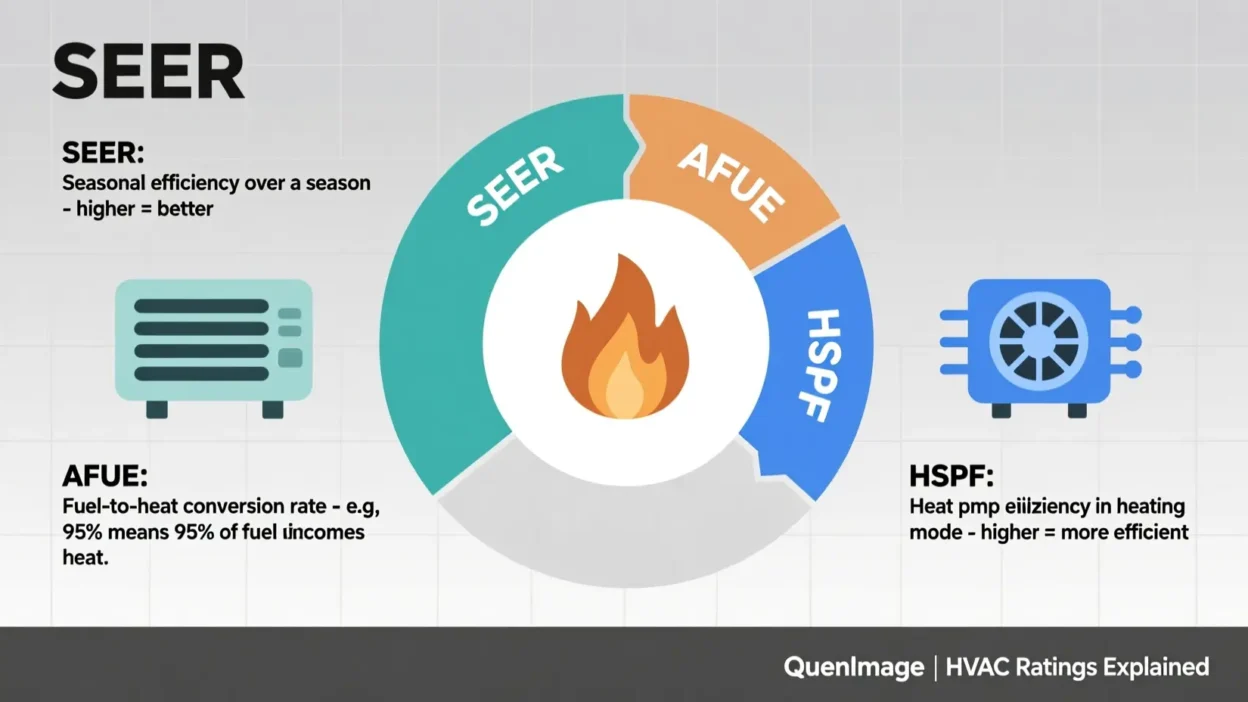
SEER stands for Seasonal Energy Efficiency Ratio. It is used to measure the efficiency of air conditioners and cooling systems.
SEER shows how well an air conditioner cools a home over an entire cooling season. It compares the amount of cooling produced to the amount of energy used.
A higher SEER number means better efficiency. For example, a system with a higher SEER uses less electricity to cool the same space.
How SEER Affects Your Home
A higher SEER rating can lower electricity bills during hot months. It also means the system runs more smoothly and steadily.
In warmer climates, choosing a higher SEER system often makes sense because cooling is used more often. In cooler areas, a very high SEER may not always be necessary.
SEER helps buyers understand long-term savings, not just upfront cost.
What Is AFUE and How It Works
AFUE stands for Annual Fuel Utilization Efficiency. It is used to measure the efficiency of furnaces and boilers.
AFUE shows how much fuel is turned into heat over a full year. It is shown as a percentage.
For example, an AFUE rating of 90% means that 90% of the fuel becomes heat, while 10% is lost.
Why AFUE Is Important
A higher AFUE rating means less fuel is wasted. This leads to lower heating bills and better energy use.
AFUE is especially important in colder climates where heating systems run for long periods.
Choosing a furnace with a higher AFUE rating can lead to better comfort and long-term savings.
What Is HSPF and When It Is Used
HSPF stands for Heating Seasonal Performance Factor. It is used to measure the heating efficiency of heat pumps.
Heat pumps provide both heating and cooling. HSPF focuses only on the heating side.
A higher HSPF number means the heat pump produces more heat using less electricity.
Why HSPF Matters
HSPF helps homeowners understand how efficient a heat pump will be during colder months.
In mild or moderate climates, heat pumps with a higher HSPF rating are very energy-efficient.
HSPF is helpful for people who rely on electric heating instead of gas or oil.
Comparing SEER, AFUE, and HSPF Simply
Each rating applies to a different type of system:
- SEER is for cooling systems
- AFUE is for fuel-based heating systems
- HSPF is for heat pump heating
They all serve the same goal. They show how much energy is used to provide comfort.
Higher ratings usually mean better efficiency, but they also often come with higher upfront cost.
How These Ratings Affect Energy Bills
HVAC ratings have a direct impact on monthly energy costs.
Systems with higher ratings use less energy. This can lower electricity or fuel bills over time.
However, savings depend on usage, climate, and how often the system runs.
A system with a high rating may cost more at first but save money in the long run.
Choosing the Right Rating for Your Climate
Climate plays a big role in choosing the right HVAC system.
In hot areas, higher SEER ratings are more valuable because cooling is used often.
In cold areas, a higher AFUE rating can bring more savings during winter.
In areas with mild temperatures, a heat pump with good HSPF and SEER ratings can be a smart option.
Choosing the right rating for your climate improves comfort and efficiency.
Higher Ratings vs Upfront Cost
One common concern is cost. Higher-rated systems usually cost more to buy.
The key is balance. A very high rating may not always be necessary.
It is important to consider how long you plan to stay in your home and how much you use heating or cooling.
Sometimes a mid-range rating offers the best balance between cost and savings.
Maintenance Still Matters
Even the best-rated system needs proper care.
Poor maintenance can reduce efficiency and shorten system life.
Regular filter changes, inspections, and cleaning help systems perform as designed.
Good maintenance ensures the system reaches its full efficiency potential.
Common Misunderstandings About HVAC Ratings
Many people think higher ratings always mean better comfort. This is not always true.
Comfort also depends on system size, installation quality, and airflow.
Another misunderstanding is that ratings guarantee savings. Savings depend on usage and energy prices.
Ratings are a helpful guide, not the only factor in decision-making.
How Ratings Help the Environment
Efficient systems use less energy. This reduces pollution and energy waste.
Choosing systems with better ratings supports energy conservation.
Lower energy use also reduces strain on power systems.
Efficiency benefits both homeowners and the environment.
Final Thoughts
Understanding SEER, AFUE, and HSPF makes HVAC choices much easier. These ratings explain how efficiently a system heats or cools your home. SEER focuses on cooling, AFUE measures fuel-based heating, and HSPF applies to heat pumps.
Higher ratings usually mean lower energy use and long-term savings. However, the best choice depends on climate, budget, and home needs. By learning what these ratings actually mean, homeowners can choose HVAC systems with confidence and enjoy better comfort and efficiency for years to come.