When someone says “spill the tea,” they’re not just talking about a hot drink anymore. ☕ The word “tea” has evolved far beyond its literal meaning — symbolizing truth, honesty, mindfulness, and even gossip in modern culture.
But what if we take it one step further? What if “TEA” became an acronym that reflects your goals, emotions, or values — whether in business, personal growth, or creative writing?
In this guide, we’ll explore 30 creative TEA acronyms, explain what they mean, give examples, and show you when to use each one. We’ll also discuss how “tea” carries different meanings across slang, business, and education so you can choose the right TEA for the right tone.
☕ What Does TEA Mean?
Traditionally, tea represents calmness, reflection, and connection — a symbol of taking time to think and unwind.
In modern usage:
- In slang, TEA = Truth, gossip, or real talk (e.g., “Spill the tea!”).
- In business, TEA = Transparency, Ethics, and Accountability.
- In education, TEA can stand for Teaching Excellence & Achievement.
So whether you want your “TEA” to sound professional, motivational, or playful, there’s a version that fits perfectly.
📘 Common TEA Meanings by Context
| Context | Common Meaning of TEA | Tone |
|---|---|---|
| Slang / Pop Culture | Truth, Entertainment, Awareness | Playful / Social |
| Business | Transparency, Ethics, Accountability | Professional |
| Education | Teaching Excellence & Achievement | Academic |
| Motivation | Try, Experience, Achieve | Inspirational |
| Relationships | Talk, Encourage, Affirm | Supportive |
| Mindfulness | Time, Explore, Appreciate | Reflective |
🧠 30 Creative TEA Acronym Alternatives and When to Use Them
Let’s explore 30 unique TEA acronyms — each with meaning, example, and usage guidance.
1. T – Truth | E – Empathy | A – Awareness
Meaning: Promote honesty and emotional understanding.
Example: “Our wellness program is built on TEA — Truth, Empathy, and Awareness.”
When to use: For self-help, emotional intelligence, or coaching content.
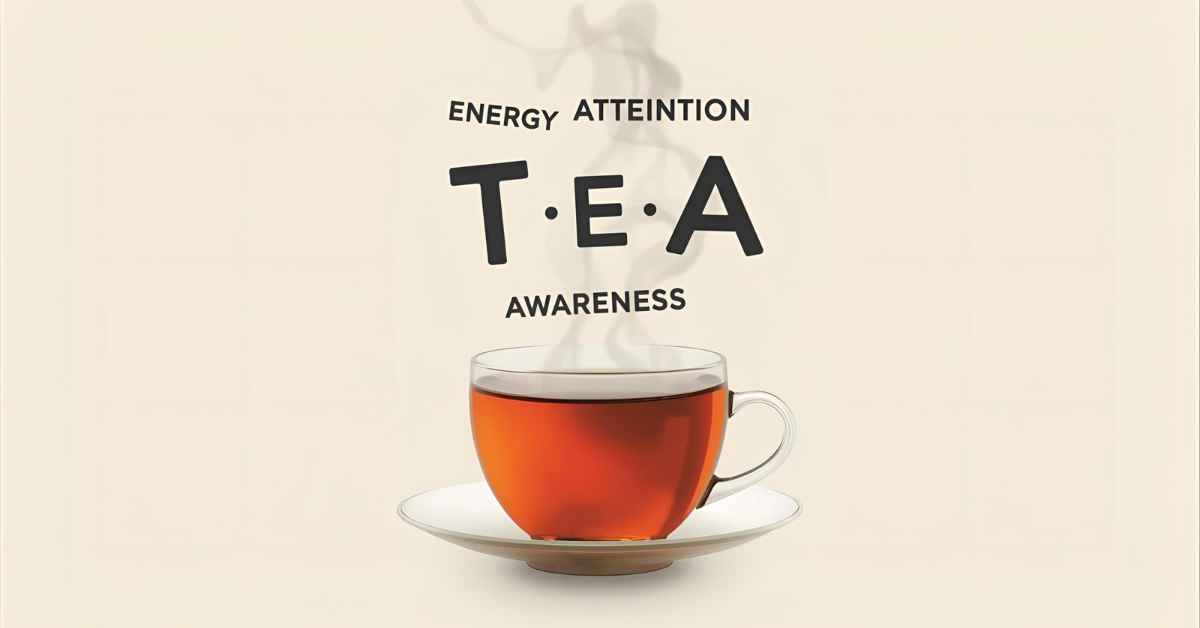
2. T – Time | E – Energy | A – Attention
Meaning: Mindfully manage your resources.
Example: “Your TEA — Time, Energy, and Attention — defines your priorities.”
When to use: Great for productivity or mindfulness writing.
3. T – Transparency | E – Ethics | A – Accountability
Meaning: Represents professionalism and integrity.
Example: “Our brand stands on TEA — Transparency, Ethics, Accountability.”
When to use: In corporate or business communication.
4. T – Talk | E – Express | A – Acknowledge
Meaning: Encourages open and healthy communication.
Example: “Let’s have some TEA — Talk, Express, Acknowledge.”
When to use: For therapy, HR, or conflict resolution topics.
5. T – Teach | E – Encourage | A – Aspire
Meaning: Leadership through education and inspiration.
Example: “Great mentors serve TEA — Teach, Encourage, Aspire.”
When to use: Perfect for educators, trainers, and motivational blogs.
6. T – Trust | E – Engage | A – Adapt
Meaning: Build confidence and flexibility.
Example: “Teams that grow drink TEA — Trust, Engage, Adapt.”
When to use: For leadership and workplace development.
7. T – Take | E – Every | A – Advantage
Meaning: A motivational call to action.
Example: “Success is brewed with TEA — Take Every Advantage.”
When to use: For entrepreneurship or sports motivation.
8. T – Think | E – Evaluate | A – Act
Meaning: Encourages critical thinking before taking steps.
Example: “Before reacting, serve yourself TEA — Think, Evaluate, Act.”
When to use: For decision-making or leadership lessons.
9. T – Together | E – Everyone | A – Achieves
Meaning: Teamwork-focused acronym.
Example: “Our workplace thrives on TEA — Together Everyone Achieves.”
When to use: Ideal for teamwork or collaboration contexts.
10. T – Trust | E – Explore | A – Adapt
Meaning: Growth through openness.
Example: “Progress starts with TEA — Trust, Explore, Adapt.”
When to use: For travel, self-growth, or change management.
11. T – Train | E – Endure | A – Advance
Meaning: Discipline and perseverance.
Example: “Athletes always drink TEA — Train, Endure, Advance.”
When to use: Fitness, military, or coaching contexts.
12. T – Think | E – Empathize | A – Act
Meaning: Emotionally intelligent activism.
Example: “Social change starts with TEA — Think, Empathize, Act.”
When to use: Perfect for community and advocacy topics.
13. T – Test | E – Evaluate | A – Adjust
Meaning: Continuous improvement mindset.
Example: “Marketers sip TEA — Test, Evaluate, Adjust.”
When to use: Ideal for business, product, or campaign strategy.
14. T – Trust | E – Embrace | A – Appreciate
Meaning: Promotes gratitude and self-acceptance.
Example: “Self-love is a cup of TEA — Trust, Embrace, Appreciate.”
When to use: Mental health or self-care contexts.
15. T – Try | E – Experience | A – Achieve
Meaning: Motivational and success-driven.
Example: “Dreamers thrive on TEA — Try, Experience, Achieve.”
When to use: For motivational or goal-setting content.
16. T – Think | E – Educate | A – Apply
Meaning: Learning through doing.
Example: “Students who succeed always have TEA — Think, Educate, Apply.”
When to use: For educational or skill-building articles.
17. T – Trust | E – Empower | A – Act
Meaning: Leadership through empowerment.
Example: “Strong leaders pour TEA — Trust, Empower, Act.”
When to use: For business and management coaching.
18. T – Talk | E – Encourage | A – Affirm
Meaning: Builds positive relationships.
Example: “In families, we believe in TEA — Talk, Encourage, Affirm.”
When to use: Relationship advice or family wellness.
19. T – Time | E – Explore | A – Appreciate
Meaning: Mindful living through curiosity.
Example: “Take a moment to sip TEA — Time, Explore, Appreciate.”
When to use: For lifestyle and wellness blogs.
20. T – Tolerance | E – Empathy | A – Acceptance
Meaning: Promotes inclusion and respect.
Example: “In diversity, we brew TEA — Tolerance, Empathy, Acceptance.”
When to use: HR, culture, or equality initiatives.
21. T – Teamwork | E – Execution | A – Achievement
Meaning: Turning cooperation into results.
Example: “Projects succeed with TEA — Teamwork, Execution, Achievement.”
When to use: For management and corporate strategy.
22. T – Think | E – Evolve | A – Ascend
Meaning: Symbol of transformation.
Example: “Personal growth is TEA — Think, Evolve, Ascend.”
When to use: For mindset or life coaching content.
23. T – Trust | E – Enjoy | A – Appreciate
Meaning: Reflects gratitude and optimism.
Example: “Happiness is found in TEA — Trust, Enjoy, Appreciate.”
When to use: Perfect for self-help or happiness topics.
24. T – Try | E – Endure | A – Advance
Meaning: Grit and persistence.
Example: “Winners sip TEA — Try, Endure, Advance.”
When to use: Motivational and athletic contexts.
25. T – Trust | E – Envision | A – Achieve
Meaning: Vision-driven leadership.
Example: “Innovators rely on TEA — Trust, Envision, Achieve.”
When to use: For entrepreneurs or business strategy.
26. T – Talk | E – Expose | A – Amuse
Meaning: Playful and slang-inspired.
Example: “Online, TEA means Talk, Expose, Amuse — basically, spill the tea!”
When to use: For pop culture or social media writing.
27. T – Tweet | E – Engage | A – Amplify
Meaning: Perfect for digital communication.
Example: “Social media TEA — Tweet, Engage, Amplify — grows your brand.”
When to use: For marketing and online community building.
28. T – Trust | E – Empathy | A – Action
Meaning: From understanding to doing.
Example: “Meaningful change comes from TEA — Trust, Empathy, Action.”
When to use: For non-profits or team motivation.
29. T – Time | E – Evaluate | A – Adapt
Meaning: Continuous reflection and agility.
Example: “Smart leaders use TEA — Time, Evaluate, Adapt.”
When to use: In business or agile management.
30. T – Thank | E – Encourage | A – Appreciate
Meaning: Embodies kindness and gratitude.
Example: “Spread positivity through TEA — Thank, Encourage, Appreciate.”
When to use: For community, gratitude, or wellbeing topics.
🫖 How to Choose the Right TEA Acronym
Selecting the right “TEA” depends on your tone, emotion, and purpose:
| Goal | Recommended TEA | Tone |
|---|---|---|
| Motivation | Try, Experience, Achieve | Energetic |
| Leadership | Trust, Empower, Act | Confident |
| Mindfulness | Time, Explore, Appreciate | Calm |
| Business Integrity | Transparency, Ethics, Accountability | Professional |
| Inclusivity | Tolerance, Empathy, Acceptance | Compassionate |
| Slang / Humor | Talk, Expose, Amuse | Playful |
Tip: Use action-driven TEA acronyms in motivational writing, empathy-based ones in counseling or HR, and calm ones in mindfulness blogs.
📚 FAQs About the TEA Acronym
Q1. What does TEA stand for in slang?
In slang, TEA means truth, gossip, or juicy information. It’s often used as “spill the tea” or “that’s the tea.”
Q2. What does TEA stand for in business?
In business, TEA can stand for Transparency, Ethics, and Accountability — a value-based acronym for corporate integrity.
Q3. What does TEA mean in education?
In education, TEA often stands for Teaching Excellence & Achievement or Texas Education Agency.
Q4. What’s a positive TEA acronym for motivation?
Try Try, Experience, Achieve — perfect for goal-oriented writing or branding.
Q5. Can TEA acronyms be used for branding or company names?
Yes! Businesses often use TEA acronyms to communicate values or missions — especially in wellness, coaching, and leadership fields.
☕ Conclusion: Brew Your Own TEA
Whether you’re spilling the tea, teaching the tea, or living the tea, your choice of acronym reflects your purpose.
From Truth, Empathy, Awareness to Transparency, Ethics, Accountability, the “tea acronym” is flexible enough for motivation, mindfulness, and meaning.
So next time you write, ask yourself — what kind of TEA are you serving? Because the right blend of words can warm hearts, inspire action, and tell your story authentically.